Objective
to compare percutaneous LAA device closure to anticoagulation for patients suitable for either as the strategy for systemic thromboembolism prevention in atrial fibrillation
Study
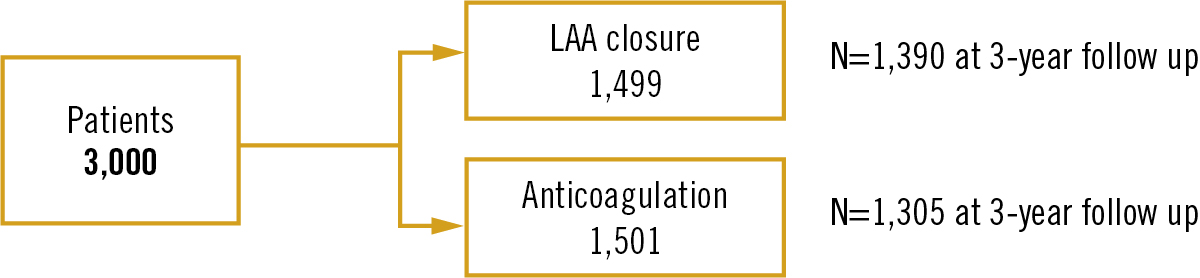
prospective, multicentre, randomised controlled trial (1:1 ratio), assessing non-inferiority of clinical efficacy and superiority for safety at 3 years
Population
patients with atrial fibrillation at increased risk of thromboembolic events (CHA2DS2-VASc score ≥2 for men and ≥3 for women) without increased risk of major bleeding (assessed with the HAS-BLED score) - i.e. suitable for anticoagulation
Endpoints
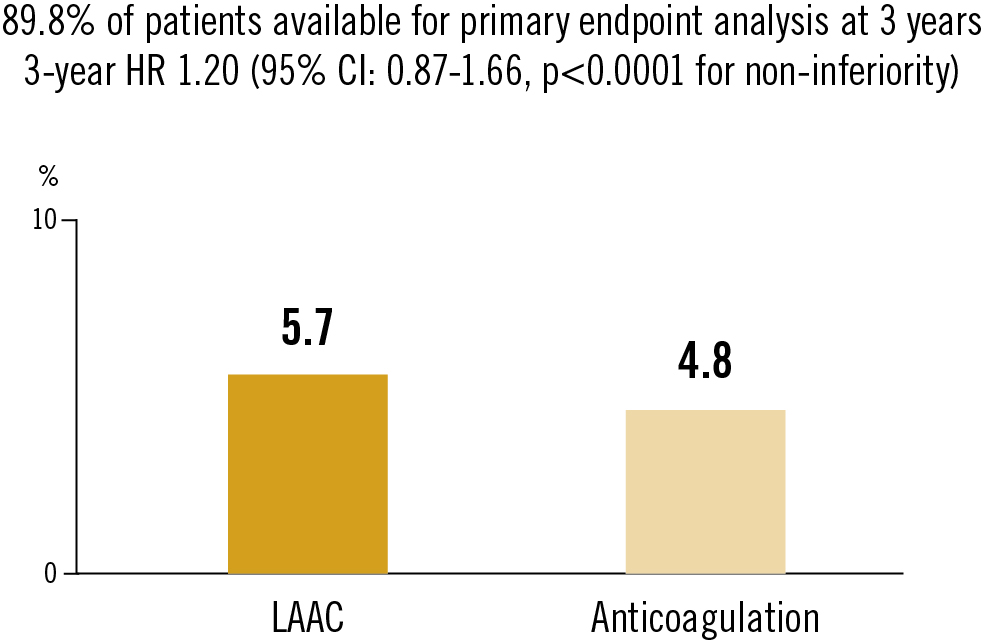
primary efficacy: composite of death from cardiovascular causes (including haemorrhage-related and unexplained deaths), stroke (ischaemic or haemorrhagic), or systemic embolism at 3 years
Conclusion
In atrial fibrillation patients suitable for anticoagulation, LAA closure was noninferior to anticoagulation at 3 years for the primary endpoint of death from cardiovascular causes, stroke, or systemic embolism; it was superior to anticoagulation therapy for nonprocedure-related bleeding.
Doshi et al. N Engl J Med. 2026 Mar 28.